


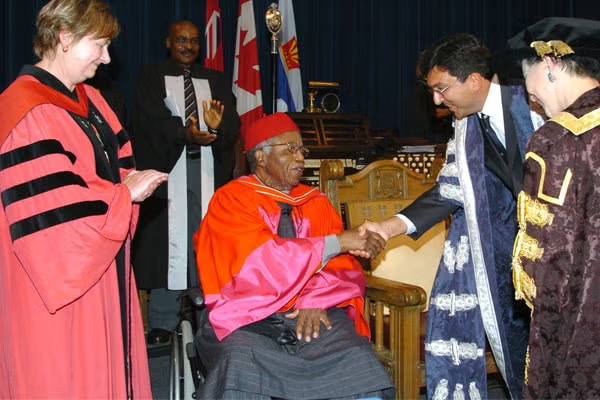
From the timeless storytelling of Chinua Achebe to the Nobel Prize-winning brilliance of Wole Soyinka, from the pioneering achievements of Flora Nwapa to the international literary influence of Chimamanda Ngozi Adichie, Nigeria has produced an extraordinary generation of writers whose words have travelled across continents, challenged conventions, preserved cultures and shaped the world’s understanding of Africa. This is a celebration of a remarkable national gift: the Nigerian ability to tell stories that the world cannot ignore.
There are things about Nigeria that deserve to be celebrated more often. Beyond the country’s enormous population, cultural diversity, entrepreneurial spirit, musical influence and sporting achievements, there is one extraordinary gift that has consistently placed Nigeria on the international map: its remarkable abundance of literary talent.
Nigeria is a country blessed with people who can turn ordinary experiences into extraordinary stories, transform personal struggles into universal human experiences and use words to challenge governments, question traditions, preserve history and inspire generations.
Across different generations, Nigerian writers have demonstrated an unusual ability to understand human nature, interpret society and communicate experiences that resonate far beyond the country’s geographical boundaries.
Some have written about colonialism, independence, cultural identity and the conflict between tradition and modernity. Others have explored love, family, migration, inequality, war, religion, politics, gender and the complicated realities of everyday life.
Their works have been translated into numerous languages, studied in universities, adapted for the stage and screen, discussed in international literary circles and preserved as important contributions to world literature.
When we talk about Nigerian excellence, we must make room for these extraordinary men and women.
And any meaningful celebration of Nigerian literary achievement must begin with one name that changed the way the world reads African literature: Chinua Achebe.
CHINUA ACHEBE: THE MAN WHO HELPED THE WORLD UNDERSTAND AFRICAN STORIES
<escape> </escape>
Few Nigerian writers have influenced African literature as profoundly as Chinua Achebe.
Born Albert Chinualumogu Achebe on November 16, 1930, in Ogidi, present-day Anambra State, Achebe grew into one of the most respected literary figures in modern history.
His extraordinary contribution to literature is perhaps best understood through his determination to tell African stories from an African perspective at a time when much of the international literary representation of the continent was shaped by outsiders.
For generations, African societies had frequently been described in foreign literature through stereotypes, colonial assumptions and incomplete interpretations of their cultures and histories.
Achebe challenged that narrative.
In 1958, he published Things Fall Apart, a novel that would become one of the most important works in African literature.
The book tells the story of Okonkwo, a respected Igbo warrior and community leader whose personal struggles unfold against the arrival of colonial rule and Christianity in his society.
But Things Fall Apart is much more than the story of one man.
It is an exploration of a society with its own institutions, customs, religious beliefs, political structures, moral expectations and internal disagreements before the arrival of European colonialism.
Achebe presented African people as human beings with complex lives, ambitions, fears, relationships and contradictions.
He gave international readers an opportunity to understand African communities from within rather than through the limited perspective of colonial observers.
The novel has sold millions of copies, been translated into more than 50 languages and become a standard text in schools and universities around the world.
Its influence is difficult to overstate.
Achebe followed this achievement with other important works, including No Longer at Ease, Arrow of God, A Man of the People and Anthills of the Savannah.
Through these works, he explored the tensions surrounding independence, political leadership, corruption, tradition, modernisation and the responsibilities of individuals within society.
His contribution extended beyond fiction. In The Trouble with Nigeria, he offered a powerful critique of the country’s political and leadership challenges.
He also received numerous international honours, including the Man Booker International Prize in 2007.
Chinua Achebe passed away on March 21, 2013, at the age of 82, but his influence continues to grow.
Today, students across the world still read his books. Writers continue to learn from his storytelling techniques, and scholars continue to examine the cultural and political questions raised in his works.
Achebe did not simply write books. He helped establish a lasting place for African voices in world literature.
That is an achievement Nigeria should never forget.
WOLE SOYINKA: THE NIGERIAN WHO TOOK AFRICAN LITERATURE TO THE NOBEL STAGE
<escape> </escape>
If Chinua Achebe helped the world rediscover African storytelling, Wole Soyinka demonstrated that Nigerian literary talent could reach the highest levels of international intellectual recognition.
Born Akinwande Oluwole Babatunde Soyinka on July 13, 1934, in Abeokuta, Ogun State, Soyinka is a playwright, poet, novelist, essayist and political activist whose contribution to literature extends across several generations.
In 1986, he became the first African to receive the Nobel Prize in Literature.
Think about the significance of that achievement.
A Nigerian writer, born and educated in a country that was still developing its post-independence institutions, stood on the international literary stage and received one of the world’s most prestigious awards.
His recognition was not an achievement for Nigeria alone. It was a landmark for African literature.
Soyinka’s works include The Lion and the Jewel, Death and the King’s Horseman, The Man Died, A Dance of the Forests and The Interpreters.
His writing frequently explores power, political oppression, cultural identity, human dignity, justice and the relationship between traditional African beliefs and modern society.
He is also known for his courage in speaking against authoritarianism and injustice.
During the Nigerian Civil War, Soyinka was detained by the Nigerian authorities for approximately 22 months after attempting to encourage peaceful dialogue. His experience in detention later informed his prison memoir, The Man Died.
His life demonstrates that literature can be much more than entertainment. It can become a form of resistance, an instrument of social criticism and a powerful defence of human freedom.
Even decades after receiving the Nobel Prize, Soyinka remains one of Nigeria’s most recognisable intellectual figures.
His story is a reminder that Nigerian writers are not merely storytellers; they are thinkers whose ideas can influence international conversations.
FLORA NWAPA: THE WOMAN WHO OPENED DOORS FOR AFRICAN WOMEN WRITERS
<escape> </escape>
The story of Nigerian literary excellence would be incomplete without recognising Flora Nwapa.
Born Florence Nwanzuruahu Nkiru Nwapa on January 13, 1931, in Oguta, present-day Imo State, she became one of the pioneering female novelists in modern African literature.
Her 1966 novel, Efuru, was particularly significant because it was among the first novels by an African woman to be published internationally in the postcolonial era.
At a time when African literature was largely dominated by male voices in international publishing, Nwapa introduced readers to the experiences, ambitions, challenges and social realities of African women through the perspective of a Nigerian woman.
Her work explored marriage, motherhood, economic independence, community expectations and the position of women in traditional and changing societies.
But Nwapa did something even more remarkable.
She did not limit herself to writing. She established Tana Press and Flora Nwapa Books, becoming one of the earliest African women to build publishing ventures dedicated to African literature.
She understood that African writers needed opportunities to publish their own stories and that women needed greater representation in the literary world.
Her influence can be seen in the generations of Nigerian women writers who followed.
Flora Nwapa passed away in 1993, but her pioneering contribution remains a permanent part of Nigeria’s literary history.
She deserves to be celebrated not only as an accomplished novelist but also as a woman who helped create opportunities for others.
BUCHI EMECHETA: THE VOICE THAT TOOK THE STRUGGLES OF AFRICAN WOMEN TO THE WORLD
<escape> </escape>
Another extraordinary Nigerian literary figure is Buchi Emecheta, whose writing brought international attention to the experiences of African women, particularly those navigating difficult social, economic and family circumstances.
Born Florence Onyebuchi Emecheta on July 21, 1944, in Lagos, she moved to Britain as a young adult and built an influential literary career.
Her personal experiences, including the challenges of marriage, motherhood, migration and raising children while pursuing her education and writing, informed much of her work.
Among her best-known books are The Joys of Motherhood, Second-Class Citizen, The Bride Price and The Slave Girl.
In The Joys of Motherhood, she examined the complicated expectations surrounding motherhood and the sacrifices women make within traditional and changing African societies.
Her writing challenged romanticised ideas about family life and brought attention to the economic and social pressures faced by women.
Buchi Emecheta became an important voice in African and feminist literature, earning international recognition for her ability to communicate experiences that were deeply Nigerian yet universally human.
Her story also deserves celebration because she demonstrated that personal struggles do not have to silence creativity.
Sometimes, the experiences that test people the most become the very foundation of the stories that inspire others.
CYPRIAN EKWENSI: THE STORYTELLER WHO CAPTURED THE ENERGY OF NIGERIAN LIFE
<escape> </escape>
Before Nigerian literature became a familiar subject in international academic circles, Cyprian Ekwensi was already establishing himself as one of the country’s most important storytellers.
Born in 1921 in Minna, present-day Niger State, Ekwensi developed a writing style that brought Nigerian urban and social life vividly to the page.
His works included People of the City, Jagua Nana, The Drummer Boy and The Burning Grass.
Through his novels and stories, he explored the lives of ordinary Nigerians, the challenges of city living, social relationships, cultural change and the experiences of people navigating different worlds.
His novel Jagua Nana became particularly popular and attracted international attention.
Ekwensi’s writing was important because it demonstrated that Nigerian literature could explore not only historical and traditional societies but also modern cities, changing social values and the realities of contemporary life.
He helped establish a tradition of storytelling that made Nigerian experiences accessible to readers both at home and abroad.
His contribution deserves recognition as part of the foundation upon which later generations of Nigerian writers built.
J. P. CLARK: THE POET WHO GAVE NIGERIA’S DELTA REGION A LITERARY VOICE
<escape> </escape>
Nigeria’s literary greatness is not confined to one ethnic group, one region or one language community.
Among the outstanding figures from the Niger Delta was John Pepper Clark-Bekederemo, popularly known as J. P. Clark.
Born in 1935 in Kiagbodo, present-day Delta State, Clark became an influential poet, playwright and academic.
His works include Casualties, The Raft, Song of a Goat and Ozidi.
His writing explored human relationships, traditional beliefs, cultural memory, political realities and the changing environment of the Niger Delta.
His poetry was particularly admired for its imagery, musical quality and ability to communicate the emotional and cultural experiences of his people.
Clark was also one of the prominent members of the generation of Nigerian writers who helped establish the country’s literary reputation in the years surrounding independence.
His work remains an important contribution to Nigerian poetry and drama.
He passed away in 2020, leaving behind a literary legacy that continues to deserve attention.
CHRISTOPHER OKIGBO: THE POET WHOSE WORDS OUTLIVED HIS SHORT LIFE
<escape> </escape>
Some literary figures leave behind enormous bodies of work. Others achieve remarkable influence through a relatively small collection of writings.
Christopher Okigbo belongs to the latter category.
Born in 1932 in Ojoto, present-day Anambra State, Okigbo became one of the most admired Nigerian poets of the twentieth century.
His poetry was known for its depth, symbolism, philosophical reflections and engagement with African cultural traditions.
Works such as Heavensgate, Limits, Silences and Path of Thunder established him as a major literary voice.
His writing combined personal experience, classical influences, African mythology and reflections on the political realities of his time.
During the Nigerian Civil War, Okigbo joined the Biafran forces and died in combat in 1967 at the age of 35.
His death cut short a promising literary career, but his poetry has continued to attract admiration from scholars, writers and readers around the world.
Okigbo’s story is also a reminder that Nigeria’s literary history is filled with extraordinary talents whose lives were shaped by the country’s complicated political and historical experiences.
ELECHI AMADI: THE NOVELIST WHO PRESERVED THE CULTURAL WORLD OF THE IGBO PEOPLE
<escape> </escape>
Another Nigerian literary giant whose contribution deserves celebration is Elechi Amadi.
Born in 1934 in Aluu, near Port Harcourt, Rivers State, Amadi became widely respected for his novels exploring traditional African society, spirituality, human relationships and cultural values.
His best-known works include The Concubine, The Great Ponds and The Slave.
The Concubine, published in 1966, remains one of the important novels in Nigerian literature.
The book explores the life of Ihuoma, a beautiful woman whose relationships and personal circumstances unfold within a society deeply influenced by traditional spiritual beliefs.
Amadi’s writing was remarkable for its ability to present traditional African society with depth and seriousness.
He did not treat African spirituality as an insignificant cultural curiosity. Instead, he presented it as an integral part of the worldview, relationships and decision-making processes of the communities he described.
His contribution is especially meaningful to the Niger Delta and Rivers State, where his work remains an important part of the region’s literary heritage.
He passed away in 2016, but his books continue to preserve important aspects of African cultural history.
BEN OKRI: THE NIGERIAN STORYTELLER WHO WON THE BOOKER PRIZE
<escape> </escape>
Nigeria’s literary influence did not end with the generation of Achebe, Soyinka and their contemporaries.
Ben Okri represents another important chapter in the country’s international literary success.
Born in Minna in 1959, Okri became internationally recognised for his imaginative writing, philosophical depth and distinctive approach to storytelling.
His most celebrated novel, The Famished Road, won the Booker Prize in 1991.
The novel follows Azaro, a spirit child navigating the complicated realities of a society marked by poverty, political instability, social inequality and supernatural experiences.
Its combination of African spiritual traditions, magical realism and political commentary established Okri as one of the most distinctive voices in contemporary world literature.
Winning the Booker Prize was another significant achievement for Nigeria.
It demonstrated that Nigerian writers could continue to compete at the highest levels of international literary recognition across different generations and styles.
Okri’s achievement also strengthened the country’s reputation as a source of imaginative and intellectually ambitious literature.
CHIMAMANDA NGOZI ADICHIE: THE MODERN NIGERIAN VOICE CAPTIVATING THE WORLD
<escape> </escape>
If there is one contemporary Nigerian writer whose international influence has become especially visible in the twenty-first century, it is Chimamanda Ngozi Adichie.
Born on September 15, 1977, in Enugu, Adichie has established herself as one of the most celebrated contemporary writers of Nigerian origin.
Her books include Purple Hibiscus, Half of a Yellow Sun, Americanah and The Thing Around Your Neck.
Her 2006 novel, Half of a Yellow Sun, explores the Nigerian Civil War through the experiences of different characters whose lives become intertwined with the conflict.
It is a deeply human examination of love, family, ideology, violence, identity and the devastating consequences of war.
Americanah explores migration, race, relationships and the experience of Nigerians navigating life in the United States and Britain.
Her TED Talk, The Danger of a Single Story, has also become widely influential, challenging audiences to recognise the limitations of viewing individuals, societies and cultures through a single narrative.
Adichie’s writing has received numerous international awards and her works are studied and discussed across the world.
She represents a generation of Nigerian writers who have inherited an extraordinary literary tradition while introducing their own perspectives, experiences and storytelling approaches.
MORE NIGERIAN LITERARY GIANTS WHO DESERVE RECOGNITION
The names already mentioned represent only a portion of Nigeria’s remarkable literary heritage.
There are many others whose contributions deserve recognition, particularly because their works have enriched Nigerian literature across different genres and generations.
Among them is Niyi Osundare, the celebrated poet and academic whose writing combines artistic excellence with social criticism, environmental consciousness and concern for ordinary people. His collection The Eye of the Earth is among his best-known works.
There is also Femi Osofisan, one of Nigeria’s most respected playwrights, whose works explore power, inequality, political responsibility and social transformation.
Ken Saro-Wiwa deserves a special place in this celebration. Born in Bori, Rivers State, he was a writer, environmental campaigner and social activist whose literary works included Sozaboy, a powerful novel about war written in a distinctive form of Nigerian Pidgin English. His life and execution in 1995 remain an important part of Nigeria’s political and literary history.
We must also celebrate Buchi Emecheta’s literary contemporaries and successors, including Zaynab Alkali, whose novel The Stillborn explored women’s experiences and social expectations in Northern Nigeria.
There is Biyi Bandele, the novelist, playwright and filmmaker whose works included The Man Who Came in from the Back of Beyond and whose contribution extended into international theatre and cinema.
There is Helon Habila, whose novels, including Waiting for an Angel and Oil on Water, have explored political repression, journalism, environmental destruction and the human consequences of conflict.
There is Sefi Atta, whose writing has explored Nigerian society, gender, migration and the complexities of modern African life.
And there is Chigozie Obioma, whose novels The Fishermen and An Orchestra of Minorities have received considerable international literary attention.
These writers, alongside numerous others, demonstrate that Nigeria’s literary achievement is not a story belonging to one remarkable generation. It is a continuing tradition.
WHAT MAKES NIGERIAN WRITERS SO REMARKABLE?
There is an interesting question worth considering: why has Nigeria produced so many outstanding writers?
Perhaps part of the answer lies in the country’s extraordinary diversity.
Nigeria is home to hundreds of ethnic groups, numerous languages, different religious traditions and an enormous variety of cultural experiences.
Its history includes ancient kingdoms, traditional institutions, colonial rule, independence, military governments, civil war, democratic transitions, migration, urbanisation and rapid social change.
Every region has its own stories, customs, struggles, celebrations, historical experiences and ways of understanding the world.
For a creative writer, this is an enormous reservoir of material.
A Nigerian writer can draw inspiration from the village square, the busy streets of Lagos, the Niger Delta waterways, the northern savannah, university campuses, traditional festivals, family relationships, political developments and the experiences of Nigerians living abroad.
There is also the richness of Nigeria’s oral storytelling traditions.
Long before the emergence of modern Nigerian novels, communities preserved history, wisdom, values and cultural identity through folktales, proverbs, songs, poetry and spoken narratives.
The ability to tell stories has always been deeply embedded in many Nigerian cultures.
Modern Nigerian writers have taken that storytelling inheritance and transformed it into novels, poetry, plays, essays and other forms of literature that can be read and appreciated around the world.
But beyond culture and history, there is another important factor: the willingness of Nigerian writers to engage difficult questions.
They have written about corruption when it was uncomfortable, examined social injustice when it was unpopular, challenged stereotypes when silence would have been easier and preserved historical experiences that might otherwise have been forgotten.
They have not always agreed with one another, and their literary styles are often very different. Yet their collective contribution has helped establish Nigeria as one of Africa’s most important literary centres.
NIGERIA’S LITERARY ACHIEVEMENTS ARE A NATIONAL TREASURE
It is easy to celebrate a footballer who wins an international trophy, a musician whose song dominates global charts, an entrepreneur who builds a successful company or an athlete who breaks a world record.
Those achievements deserve recognition.
But we must also learn to celebrate the people whose achievements are built with words, ideas, imagination and intellectual courage.
A book can influence generations. A poem can preserve a people’s memory. A play can challenge a society to confront its weaknesses. A novel can introduce millions of readers to a culture they have never experienced.
The influence of Nigerian writers has extended far beyond bookshops and university classrooms.
Their works have helped shape international conversations about Africa, colonial history, political leadership, identity, gender, migration and human relationships.
They have introduced the world to Nigerian names, places, cultures and experiences.
When readers in Europe, America, Asia and other parts of the world encounter Achebe, Soyinka, Adichie, Okri or Emecheta, they are also encountering important dimensions of Nigeria’s intellectual and cultural heritage.
That is soft power.
It is a form of international influence that cannot always be measured in financial terms but can shape perceptions and create lasting connections between countries and societies.
Nigeria should recognise its writers as important cultural ambassadors.
THE NEXT GENERATION MUST NOT BE LEFT BEHIND
One of the most important lessons from the achievements of Nigeria’s literary giants is that talent must be nurtured.
The country cannot simply celebrate its great writers from a distance while neglecting the young people who may become the next Achebe, Soyinka, Adichie or Okri.
There are talented Nigerian children and young adults today who have extraordinary imaginations, powerful ideas and the ability to communicate through writing.
Some are writing stories in their bedrooms. Others are publishing online, participating in literary competitions, contributing to school magazines or developing manuscripts they hope to publish someday.
They need encouragement, mentorship, access to books, functional libraries, quality education and opportunities to share their work.
Publishers, educational institutions, government agencies, literary organisations and successful Nigerian writers all have a role to play in strengthening the next generation.
We should encourage children to read beyond examination requirements. We should teach them to appreciate literature, develop their own voices and understand that writing can be a serious profession and a meaningful contribution to society.
We must also recognise that Nigerian literature should not be restricted to English alone. Indigenous languages carry enormous cultural and intellectual treasures, and their continued use in literature is important for preserving Nigeria’s diversity.
The next generation should be encouraged to write, publish, translate and preserve stories in the languages through which their communities understand the world.
Imagine a Nigeria where every state has thriving literary festivals, well-equipped public libraries, active writing communities and publishing opportunities for young authors.
Imagine Nigerian books receiving even greater international distribution, with more works adapted into films, television productions and theatrical performances.
Imagine the next generation of Nigerian writers winning international awards while also creating a vibrant reading culture at home.
These possibilities are worth investing in.
TODAY, WE CELEBRATE THE NIGERIAN MIND
Today, we celebrate Chinua Achebe, whose words helped the world understand African societies beyond colonial stereotypes.
We celebrate Wole Soyinka, whose literary brilliance earned Nigeria a place in Nobel Prize history.
We celebrate Flora Nwapa, who opened important doors for African women writers.
We celebrate Buchi Emecheta, whose stories brought the experiences of African women to international audiences.
We celebrate Cyprian Ekwensi, J. P. Clark, Christopher Okigbo and Elechi Amadi, whose works enriched our understanding of Nigerian society, culture and history.
We celebrate Ben Okri, whose imagination carried Nigerian storytelling to the Booker Prize stage.
We celebrate Chimamanda Ngozi Adichie and the contemporary generation of writers continuing to introduce Nigerian experiences to new audiences.
We celebrate Ken Saro-Wiwa, Niyi Osundare, Femi Osofisan, Zaynab Alkali, Helon Habila, Sefi Atta, Chigozie Obioma and the many other literary talents whose contributions have strengthened the country’s intellectual heritage.
We also celebrate the countless Nigerian writers whose names may not yet be internationally recognised but whose words are making a difference in their communities, schools, publications and literary circles.
These individuals represent something truly special about Nigeria.
They remind us that our greatest national resources are not limited to oil, gas, minerals, agricultural land or physical infrastructure. Our people, their intelligence, imagination, creativity and capacity to communicate ideas are among the country’s most valuable assets.
Nigeria is blessed with writing geniuses.
We have produced storytellers who have challenged the world, poets who have captured the human experience, playwrights who have confronted injustice and novelists whose works have become part of international literary history.
This is not a small achievement. It is a national treasure.
And perhaps the most beautiful part of this story is that it is not over.
There are more Nigerian stories waiting to be written, more talented minds waiting to be discovered and more literary achievements waiting to emerge.
We must continue to read our writers, celebrate their contributions, preserve their works and encourage the next generation to follow in their footsteps.
A country that produces such extraordinary storytellers has every reason to be proud of its intellectual heritage.
Nigeria is not just a nation of talented musicians, athletes, entrepreneurs and professionals. It is also a nation of extraordinary minds, powerful storytellers and literary geniuses.
Today, we celebrate the Nigerian writer. We celebrate the Nigerian imagination. We celebrate the Nigerian gift of words.
NIGERIAN EXCELLENCE. GLOBAL INFLUENCE. STORIES THAT WILL OUTLIVE GENERATIONS.
Proudly Nigerian. Proudly literary. Proudly global. 🇳🇬