

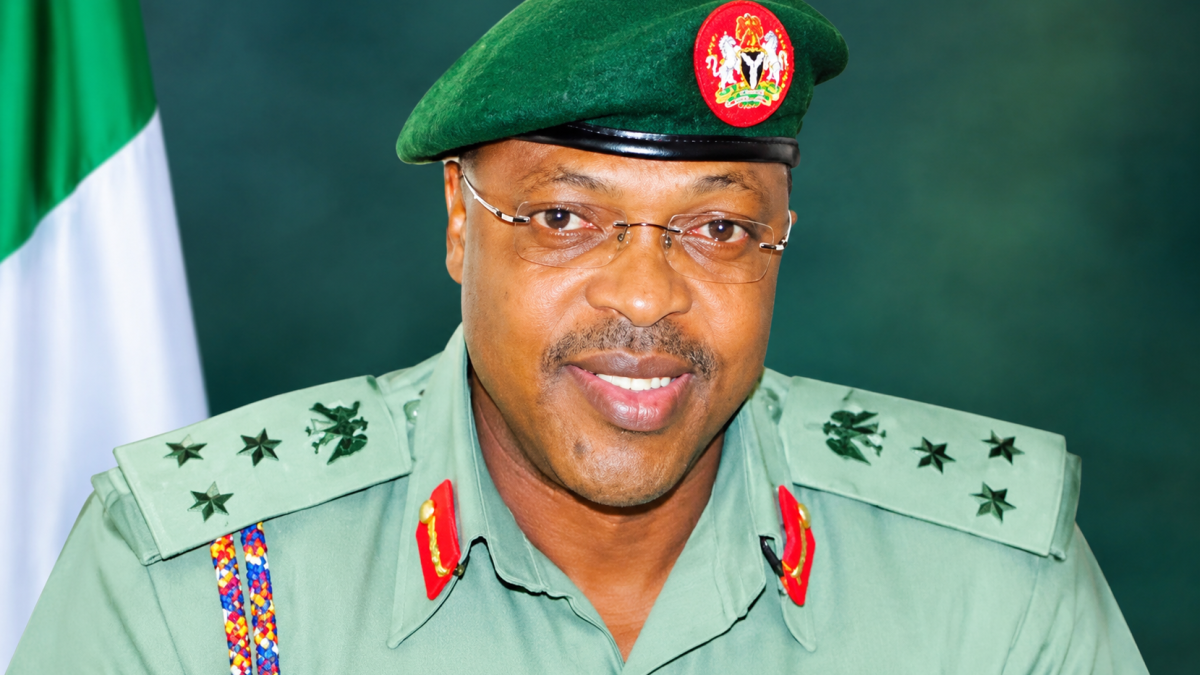
Celebrating a remarkable Nigerian military officer whose service, humanity, intellectual curiosity and commitment to the next generation remain worthy of remembrance.
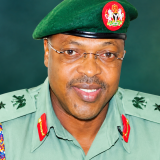
There are men whose lives are measured by the positions they occupied, and there are others whose significance extends far beyond their official titles. They are remembered not merely because they wore the uniform of their country, commanded men or occupied important offices, but because of the values they demonstrated, the people they influenced, the responsibilities they carried and the difference they made in the lives of those fortunate enough to encounter them. Brigadier General Solomon Uangbaoje Giwa-Amu, who lived between November 2, 1959, and February 18, 2008, belongs to the latter category.
His was a life of military service, national responsibility, personal relationships, intellectual engagement and an apparent determination to make opportunities available to others. He rose through the ranks of the Nigerian Army, occupied positions of considerable national importance, represented Nigeria abroad and became a trusted aide to one of the country’s most prominent political leaders. Yet, beyond the official appointments and military insignia, accounts from people who knew him reveal another dimension of his personality: a man remembered for generosity, humility, approachability, discipline and a willingness to extend a helping hand.
His death at the age of 48, following a road accident along the Abuja-Kaduna highway on February 18, 2008, brought an unexpectedly early end to a career and a life that still had considerable room for further contributions. It also left Nigeria with an important question about the value of its people, the preservation of institutional knowledge and the responsibility of society to recognise outstanding citizens while they are alive.
A Son of Nigeria, A Soldier of the Republic
Solomon Giwa-Amu was born on November 2, 1959. His roots were in Sabongida-Ora, in present-day Edo State, a community that would remain an important part of his personal identity and family history.
He belonged to a generation of Nigerians whose formative years coincided with a particularly challenging period in the country’s development. Born just nine years after independence, he came of age in a nation navigating military governments, political transitions, economic uncertainties and the difficult task of building institutions capable of sustaining a diverse and ambitious country.
For a young Nigerian choosing a military career during that era, the decision involved more than the attraction of a uniform or the prestige associated with an officer’s rank. Military service demanded discipline, physical and intellectual preparation, obedience to institutional responsibility, personal sacrifice and a willingness to place national obligations above many private interests.
Giwa-Amu embraced that profession and built a career that would take him into some of the most consequential areas of Nigeria’s military and national administration.
He served as an aide-de-camp to General Ike Nwachukwu and subsequently became Aide-de-Camp to President Olusegun Obasanjo. He later served as Director of Army Public Relations and as Defence Attaché to Nigeria’s mission in New York. These appointments placed him at the intersection of military administration, presidential responsibilities, national communication and international representation.
Such positions require more than professional competence. They demand discretion, sound judgment, discipline, an understanding of institutional relationships and the ability to operate in environments where decisions, information and personal conduct can have consequences far beyond the individual officer.
His career therefore offers an opportunity to appreciate the breadth of responsibilities that can be entrusted to a military officer who progresses beyond conventional operational duties.
The Presidential Aide Who Occupied a Position of Exceptional Trust
One of the most significant chapters in Giwa-Amu’s career was his appointment as Aide-de-Camp to President Olusegun Obasanjo, serving from 1999 to 2003.
This was a particularly important period in Nigerian history. The country had returned to democratic government in May 1999 after years of military rule. The new administration faced the enormous responsibility of rebuilding democratic institutions, restoring international confidence and navigating the complicated relationship between the military establishment and a civilian government.
As the President’s ADC, Giwa-Amu occupied a position that placed him close to the centre of national executive activity. An ADC is not simply an officer accompanying a President at public appearances. The appointment involves personal security coordination, protocol, scheduling, operational preparedness and the management of sensitive responsibilities surrounding the head of state.
It also demands an unusual combination of professional discipline and personal discretion.
According to a later account by Tunde Olusunle, who recalled an encounter with Giwa-Amu during the 2002 United Nations General Assembly in New York, the officer spoke positively about the experience of serving Obasanjo. He reportedly appreciated the exposure to a broad spectrum of people and experiences that the assignment provided, while also expressing a desire to return to his mainstream military career rather than remain outside the conventional military structure for too long.
That observation is particularly revealing. It suggests an officer who understood the value of high-level exposure but remained conscious of his professional identity and the importance of maintaining his place within the institution to which he had devoted his career.
His relationship with Obasanjo was described as close, and the President reportedly wished to retain his services into the second term. Yet Giwa-Amu was also said to have been concerned about the implications of remaining in the presidential environment for too long, particularly the possibility of professional misunderstandings or resentment among colleagues.
This was one of the difficult realities of military careers: advancement, visibility, appointments and professional relationships do not always operate independently of institutional politics.
Giwa-Amu’s experience reminds us that public service can involve navigating competing expectations while trying to preserve professional integrity and personal ambition.
Beyond the Uniform: A Man Who Understood the Importance of Education
Perhaps one of the most admirable aspects of Giwa-Amu’s legacy was his interest in education and the development of young people.
His commitment to learning was not restricted to professional military requirements. His association with the United States Army War College and his interest in military history, strategic thinking, economics and international affairs reflected an appreciation of the intellectual dimensions of leadership.
A soldier’s responsibilities do not end with the ability to command troops or understand military operations. The modern military professional must also understand history, diplomacy, economics, political institutions, technology and the changing character of international security.
Giwa-Amu’s interest in these areas is especially significant when considered against the background of Nigeria’s continuing need to strengthen professional military education and develop leaders capable of understanding both national and international challenges.
His concern for education extended beyond military colleagues. During the final years of his life, he established the Efe Giwa-Amu Read and Lead Foundation, popularly associated with the name EFE GARAL.
According to his widow, Dr Judith Giwa-Amu, the foundation was conceived to encourage reading among Nigerian young people and help develop leadership skills that would prepare them for greater responsibilities as adults.
This was an investment in the future that went beyond the immediate requirements of military service.
He recognised, at least through the educational initiative attributed to him, that a country cannot build a sustainable future merely by producing people who can follow instructions. It must also cultivate readers, thinkers, responsible citizens and individuals capable of providing leadership.
In 2018, during activities marking the tenth anniversary of his death, the foundation donated books covering military science, Nigerian history, economics and globalisation to the Army War College Nigeria. The donation was presented as an effort to advance his interest in intellectual development and military education.
The significance of this gesture deserves attention. It demonstrated that the memory of a military officer could be preserved not only through ceremonial tributes but also through the practical continuation of the values he held dear.
A Soldier Who Remembered the People Behind the Uniform
Military institutions are necessarily hierarchical. Rank, discipline, command and responsibility are central to their functioning. Yet the best traditions of military professionalism also recognise that leadership is ultimately about people.
This is where some of the most personal accounts of Giwa-Amu become particularly meaningful.
In a tribute published shortly after his death in February 2008, Jude Arijaje recalled meeting him in 1986 at the Nigerian Army’s S&T Barracks in Ugbowo, Benin City, when Giwa-Amu was a captain.
Arijaje described an officer who welcomed university students, made himself accessible and treated younger people with unusual warmth. He recalled how Giwa-Amu provided assistance when students were short of money for food, transportation and other basic needs. He also remembered the officer’s patience and his refusal to use his military status to intimidate or distance himself from the young people around him.
This is a remarkable dimension of leadership.
A person may command respect because of rank, wealth, professional achievements or public influence. But earning the affection and enduring gratitude of people who have little or nothing to offer in return is a different achievement altogether.
The recollections of Arijaje suggest that Giwa-Amu understood the importance of human relationships and did not allow his growing professional status to erase his sense of fellowship.
He was reportedly regarded as a protector, an older brother and a source of inspiration by some of the younger people whose lives intersected with his.
It is easy to celebrate a general because of the stars on his shoulders. It is more meaningful to remember him because of the people who could testify that he made their lives a little easier.
The Barracks Children Development Programme: Challenging Stereotypes, Creating Possibilities
Another aspect of his legacy was the Barracks Children Development Programme, which was credited to him during the tenth-anniversary remembrance activities in 2018.
The initiative reportedly sought to challenge negative assumptions about children growing up in military barracks and encourage their educational and personal development.
This was an important intervention because children should not be judged by the circumstances or reputation of the environments in which they grow up.
Military barracks are communities with their own cultures, opportunities and challenges. Children growing up in such environments deserve access to the same encouragement, education and possibilities available to their counterparts elsewhere.
The programme reflected an understanding that social development begins with the willingness to recognise potential in people whom society may otherwise overlook.
It also demonstrated an aspect of Giwa-Amu’s thinking that deserves to be celebrated: the desire to use personal experience and institutional access to create opportunities for younger Nigerians.
A man who had risen through the military hierarchy could easily have concentrated exclusively on his own professional advancement. Yet the initiatives associated with his name suggest that he also considered what could be done for people coming behind him.
The Nigerian Officer in an International Environment
Giwa-Amu’s service as Defence Attaché to Nigeria’s mission in New York added an international dimension to his career.
Defence attachés occupy an important place in international relations. They represent their countries’ defence interests, maintain professional relationships with foreign military institutions, engage with diplomatic communities and contribute to the exchange of information and perspectives on security matters.
For Nigeria, a country with significant regional responsibilities and a longstanding role in international peacekeeping and African security affairs, such representation is particularly important.
His New York assignment also placed him in an environment where Nigeria’s military and diplomatic interests intersected with the wider international community.
It was during this period that he and his wife, Judith, were described by a fellow University of Benin alumnus as instrumental in helping establish the North America chapter of the University’s alumni association.
That involvement provides another illustration of his capacity to maintain relationships outside his immediate professional environment.
He was not simply a representative of the Nigerian military abroad; he remained connected to people, institutions and communities that formed part of his personal history.
Comparing His Generation with Their Contemporaries Abroad
There is a wider story to be told about Giwa-Amu when his life is considered alongside those of military officers born around 1959 in other parts of the world.
His international contemporaries grew up during the Cold War, the changing balance of global power, technological transformation and the evolution of modern military institutions. Officers in countries such as the United States, Britain, France and India were also navigating professional military careers during periods of significant political and strategic change.
Many of their careers would have been shaped by different institutional environments, defence budgets, training opportunities, international assignments and systems of professional advancement.
Nigeria’s military officers of the same generation, however, had to navigate a distinctive national environment. Their careers unfolded against the background of successive military governments, the transition to the Fourth Republic, changing military priorities and the continuing challenge of strengthening democratic civil-military relations.
The comparison is not about suggesting that every foreign officer enjoyed an easier career or that every Nigerian officer faced identical difficulties. Rather, it is about recognising that individual achievement must be understood within the opportunities and constraints of the institutions in which people serve.
In Giwa-Amu’s case, his progression into senior responsibilities, his exposure to presidential administration, his international diplomatic assignment and his interest in advanced military education demonstrate a professional journey that extended beyond the conventional boundaries of a purely domestic military career.
There is also an important difference between what a country does with its experienced officers and what it does with the knowledge they accumulate.
In several established military systems, senior officers who leave active service can continue contributing through defence education, research institutions, strategic advisory appointments, public administration and professional mentorship.
Nigeria has similar institutions and opportunities, but the challenge of systematically preserving the knowledge of experienced officers remains an important subject for national reflection.
Giwa-Amu died before he could enter the later stages of his career. At 48, he was still relatively young by the standards of senior professional leadership. Had he lived longer, he might have had opportunities to contribute further to military education, strategic thinking, institutional development and national service.
We cannot know what positions he might eventually have occupied or what additional achievements he might have recorded. But we can recognise the value of the experience he had already accumulated.
His story should encourage Nigeria to think more seriously about how it identifies, develops, retains and utilises talented public servants.
The Tragedy of a Life Interrupted
On February 18, 2008, Brigadier General Solomon Giwa-Amu died in a road accident along the Abuja-Kaduna highway.
He was 48 years old.
The tragedy was particularly painful because it brought an abrupt end to a life that had already demonstrated considerable professional and personal promise.
A country loses something when a person with experience, institutional knowledge, professional relationships and a commitment to younger generations dies prematurely.
Such a loss is not limited to the immediate family or the organisation in which the individual served. It is also a loss to the wider society, which may never fully benefit from the person’s accumulated knowledge and future contributions.
His death also raises questions about road safety and the condition of critical national highways. The circumstances of the accident were reported at the time as involving the Abuja-Kaduna highway, with road conditions identified in subsequent accounts as a contributing concern. Every Nigerian life lost on a dangerous road should remind the country that infrastructure is not merely about transportation statistics; it is about protecting human lives and preserving the contributions people are capable of making.
For his wife, children, relatives, friends, colleagues and admirers, the loss was deeply personal.
For Nigeria, it was the premature departure of a senior military officer whose experience could have continued to serve the country for many more years.
A Legacy That Outlived His Years
Ten years after his death, tributes to Giwa-Amu brought together former public officials, military officers, friends and members of his family. Former Cross River State Governor Liyel Imoke, who chaired the remembrance event, described him as compassionate, generous and disciplined.
The Nigerian Army also indicated its intention to honour his memory, recognising the contribution he had made through his service.
These tributes are important, but the most enduring form of remembrance is the continuation of the values and initiatives that made a person’s life meaningful.
The Efe Giwa-Amu Read and Lead Foundation, the educational initiatives associated with his name, the Barracks Children Development Programme and the donation of books to the Army War College all provide practical avenues through which his memory can remain relevant.
There is also a lesson for Nigerian institutions. The contributions of outstanding officers should be documented, studied and made accessible to younger generations. Their experiences should form part of the country’s institutional memory, particularly in areas such as military professionalism, strategic leadership, civil-military relations, international representation and public service.
Remembering a distinguished officer should not be confined to anniversary ceremonies. It should involve asking what younger Nigerians can learn from his career and how the institutions he served can continue to benefit from the principles he represented.
Nigeria Must Learn to Celebrate Its Outstanding Citizens
One of the recurring shortcomings of Nigerian society is the tendency to appreciate some of its outstanding citizens more fully after they have died.
We often wait until the funeral, memorial service or anniversary celebration before reflecting on the significance of a person’s contributions. We sometimes allow valuable professional experience, personal stories and institutional knowledge to disappear because we have not made sufficient efforts to document them while the individuals concerned are still alive.
Giwa-Amu’s story deserves a different approach.
His military career should be documented. His experiences as a presidential ADC should be preserved. His interest in education and leadership development should be examined. Those who served with him, worked with him, studied alongside him or benefited from his generosity should be encouraged to share their recollections.
His life also offers an opportunity to recognise the many Nigerians whose contributions may not receive the international recognition they deserve, but whose work has helped shape institutions, communities and individual lives.
A nation is not built only by its presidents, governors, billionaires and internationally celebrated personalities. It is also built by professional soldiers, teachers, civil servants, researchers, doctors, entrepreneurs, administrators and ordinary citizens who take their responsibilities seriously and use their opportunities to help others.
Brigadier General Solomon Uangbaoje Giwa-Amu was one of those Nigerians whose story deserves to remain part of the national conversation.
He was a soldier who served his country, an officer who occupied positions of trust, a man who valued education, a professional who maintained relationships beyond the barracks and an individual remembered by friends for his generosity and humanity.
He did not have the luxury of a long retirement in which to reflect on his accomplishments or pass on all the knowledge he had accumulated. His life ended much earlier than it should have.
But a life does not become insignificant because it ends prematurely, just as a person’s legacy is not determined solely by the number of years he spends on earth.
The true measure of Giwa-Amu’s legacy lies in the responsibilities he undertook, the people he influenced, the institutions he served and the values that those who remember him continue to associate with his name.
Nigeria must remember him not merely as the former Aide-de-Camp to President Olusegun Obasanjo or the former Director of Army Public Relations, but as a complete human being whose life combined professional ambition with personal generosity and whose vision extended beyond his own generation.
Brigadier General Solomon Uangbaoje Giwa-Amu deserved more time. Nigeria deserved more years of his experience. His family deserved more years of his companionship. The young people who looked up to him deserved more opportunities to learn from him.
Although those additional years were not granted, the responsibility of preserving the lessons of his life remains with us.
He wore the uniform of his country, but his legacy was never confined to the uniform. He served Nigeria through his profession, touched lives through his humanity and invested in the future through his commitment to education and young people. That is a life worthy of celebration, and a Nigerian worthy of remembrance.