


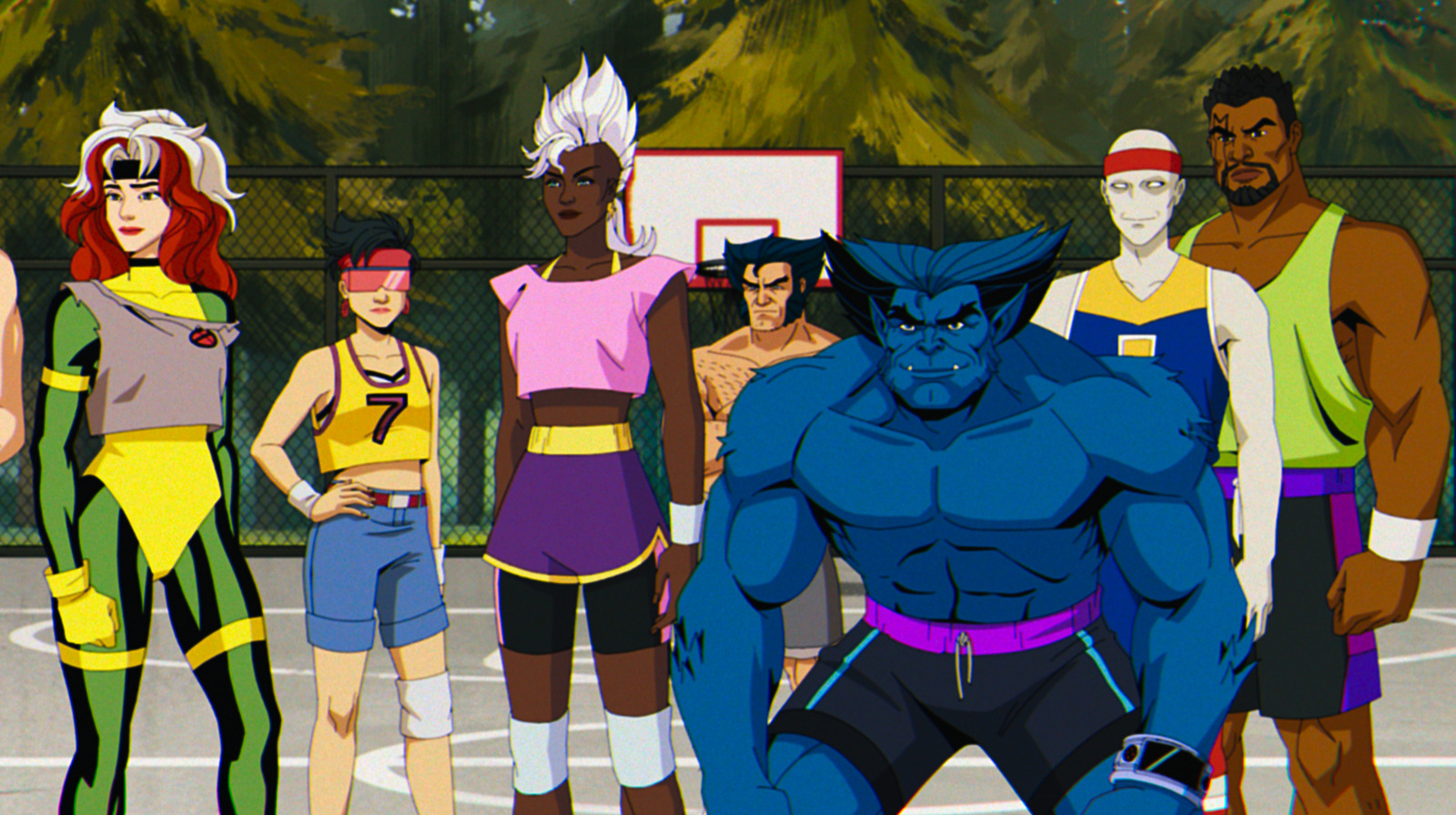
The animation in “X-Men ’97” is designed after the 1992 series, although it lacks the authentic sloppiness and plentiful visual mistakes of the original. If DeMayo really wanted to recreate the look and feel of the 1992 series, he would have given his animators low budgets and unfair time crunches, resulting in mysteriously disappearing noses, color-changing ties, and background characters that vanish between edits. A generation of kids was obsessed with the 1992 series, and many tout it as the pinnacle of 1990s superhero entertainment, but it’s worth remembering that it was a shabby, rushed affair. For some of us, the shabbiness was part of the show’s charm.
To the credit of “’97,” the series does include a lot of extreme close-ups and scenes of characters who speak with their backs turned to the camera, a clear reference to the 1992 show’s cost-cutting animation techniques. Why animate a mouth when a drawing of Wolverine’s back is so much easier?
“X-Men ’97” is tighter and cleaner, a brushed-up version of the ’92 series, complete with the Jim-Lee-era X-Men costumes that mutant fans seem to be the most fond of. It’s trying to recreate in 2024 your memories from 1992.
Luckily, that semi-insufferable nostalgia carries with it an efficiency of storytelling that has been lacking in the previous 15 years of superhero entertainment. With 30-minute episodes and a dozen main characters, “X-Men ’97” doesn’t beat around the bush, assuming we all know the backstory, and that we’re willing to accept the show’s crazier elements. Magneto (Matthew Waterson) sports a big “M” on his outfit, and the series doesn’t preciously point out — as the MCU might — how silly it looks. That’s Magneto’s outfit.


