




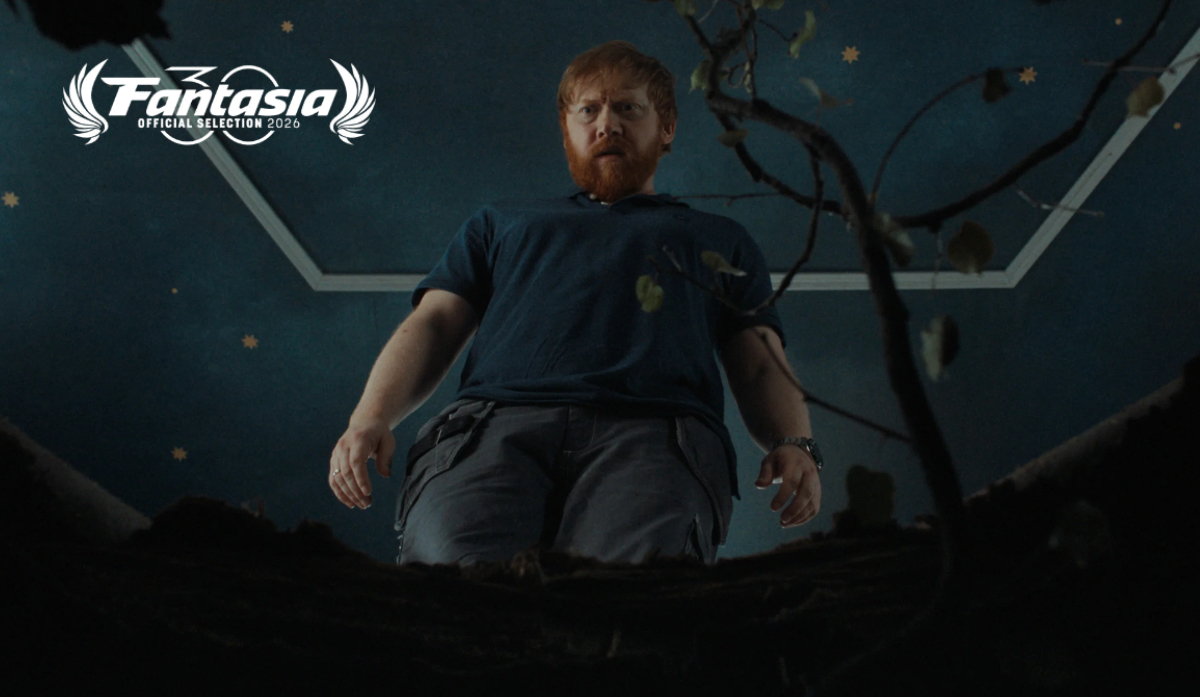

Director Hanna Bergholm impressed horror audiences back in 2022 with her disturbing, coming-of-age body horror Hatching, so viewers are excited to see her back with Nightborn. The film stars Rupert Grint (Harry Potter) and Seidi Haarla (Compartment No.6) who embark on a new chapter as parents in a Finnish forest. New mum Saga’s joy is overshadowed by a chilling suspicion about their newborn, unbeknownst to husband Jon, causing a rift as she alone grapples with the disturbing truth. A haunting, eerie slow burn showcasing excellent performances, Bergholm delivers a strong body horror that doubles up as an insightful exploration into motherhood.
As soon as we get to the forest in which Nightborn is set, we know we’re in for a chilling ride. The house located in the midst of the trees is undeniably beautiful and scenic, allowing for some beautiful, fresh and green cinematography to pull through, but also has an unsettling, eerie nature about it. With shots that linger slightly too long on dark corners of the forest and sound design that gives the impression something is lurking, Nightborn immediately gives viewers a tangible sense of unease. The film certainly opts for a slow burn approach, but the momentum steadily builds to ensure we’re kept on the edge of our seats regardless. What starts as noises coming through from the trees and paranoia from mother Saga builds into a concoction of body horror, tension between the once loved-up couple, outbursts, bloodshed, injuries and even more. Not for the faint of heart, the gore on display is often wince-inducing. The slow burn is incredibly effective, but the pay-off should also be worth it for those looking for a killer final act. With multiple horror elements that feel fresh and new, and all instances of scares that are well-paced throughout the run-time, Bergholm’s inspired direction ensures the journey is worth it.

As competent as Nightborn is as a horror film, it is much more committed to providing exploration into new motherhood than it is scaring you. Here, any horror works as a vessel for those intense, important themes to come through, and it works a treat. From the early stages of bringing their newborn home, it is clear that Saga is struggling to bond with him. From extreme pain whilst breastfeeding to her sons constant tears and tantrums, she feels very detached from him and unable to perform the basic, necessary duties of motherhood – an experience that is all too common. Pairing that with a husband who can’t seem to fully understand her struggles and spends a lot of time away, Saga is sleep-deprived, stressed and most importantly, struggling. Her frustration that her husband can’t see what she sees – that something is seriously wrong with their son – not only causes strange behaviours and strange upbringing choices for Saga, but much more of a distance between her and husband Jon. The pair can never see eye to eye on what’s best for their son, and their strained relationship becomes more tumultuous as the runtime progresses. The themes within Nightborn hit as hard as they do because they are simply exaggerated versions of real life experiences. There are real life terrors within motherhood that thousands of women face, from detachment with their child to a change in relationship with their partner. Bergholm explores these ideas through intensity and fantasy, but they resonate nonetheless.
At the centre of it all is a killer lead performance from Seidi Haarla, who commits every fibre of her being to the unhinged, paranoid and detached character of Saga. It’s an incredibly demanding performance in terms of physicality and emotion, expecting Haarla to go to dark and often scary places, yet she seems to manage it effortlessly. Her tiredness feels realistic, her detachment with her son eerily accurate, and those more horrific scenes are approached by Haarla in a way that feels akin to her characters experiences. She gives a truly fantastic performance that deserves acclaim and attention. Of course, Grint delivers a strong turn opposite her, as a husband that just wants to start the family that he’s envisioned with his wife, but is held back by the absurdity at play. What starts as a basic lack of understanding soon turns into an undertone of hatred towards Saga, and Grint carries that arc seamlessly. The pair also exude great chemistry at the start of the film when they arrive at their new family home, leaving a lasting impression on the viewer that allows us to consistently route for them despite challenging behaviours from both sides. Grint is great, and Haarla is astonishing.
The only thing preventing Nightborn from reaching true greatness is that we’ve seen a lot of pregnancy and motherhood horror prior to this. Whilst Nightborn certainly has something new to say, and we shouldn’t take the competent balance of fantastical horror and stark reality away from it, the script is very in your face with its themes, many of which we’ve seen explored before. However, we’ve never quite seen them explored in this way, which makes Nightborn a solid viewing experience regardless. Boasting excellent performances and confident direction and writing from Bergholm, Nightborn is a satisfying slow burn that makes up for any familiarity with its unique environment and ending.
Grade: B
Follow us on MSN for more of the content like this.

Nightborn
In Finnish forest, Saga and her husband Jon embark on a new chapter as parents. But Saga’s joy is overshadowed by a chilling suspicion about their newborn, unbeknownst to Jon, causing a rift as she alone grapples with the disturbing truth.


