

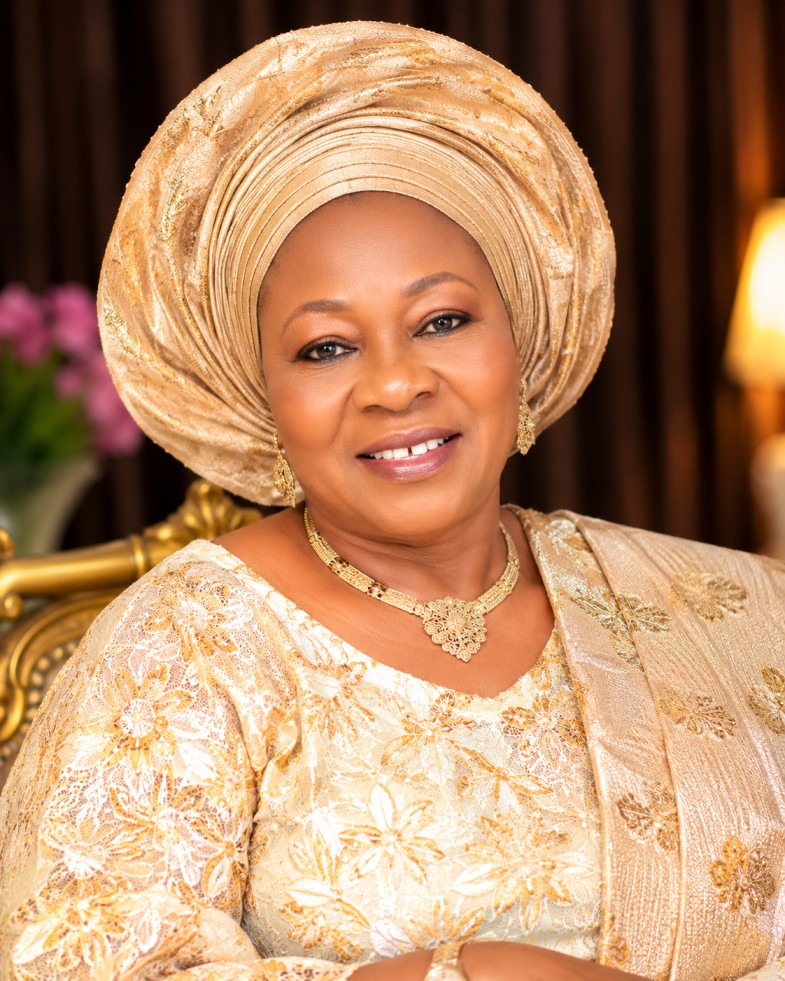
From a United Kingdom-trained seamstress to a businesswoman, grassroots mobiliser, political leader and former councillor, Hope Efe Igeme Akporeha’s journey is a story of resilience, influence, service and a woman’s determination to make her people matter.
There are politicians who discover their people when an election is approaching.
And there are politicians whose political lives have been woven into the fabric of their communities long before the ballot papers arrive.
Hon. Hope Efe Igeme Akporeha, JP, belongs to the second category.
Her story is not one that began with the declaration of an ambition to occupy the Delta State House of Assembly.
It began much earlier—in the political trenches of Isoko North, in the mobilisation of women, in the difficult work of building trust, in standing with political principals, and in demonstrating repeatedly that a woman can be both politically influential and economically productive.
Today, as she seeks to represent Isoko North Constituency in the Delta State House of Assembly, she is not asking her people to vote for an unfamiliar face.
She is asking them to consider a woman they have watched grow, serve, mobilise, build and remain politically relevant across different seasons.
And perhaps that is what makes her story compelling.
THE WOMAN WHO UNDERSTOOD THE POWER OF WOMEN
Long before the language of political inclusion became fashionable, Hope Efe Igeme understood something that Nigerian politics has repeatedly demonstrated:
When you mobilise women, you mobilise a formidable political force.
Her rise to political prominence in Isoko North was closely associated with her leadership of women who massively supported the administration of Chief James Ibori, then Governor of Delta State.
It was not merely about being present at political gatherings.
She became a grassroots organiser.
She understood the language of the market woman, the mother, the entrepreneur, the community woman and the ordinary voter.
She understood that political mobilisation is ultimately about people.
And she built influence by working with them.
That grassroots strength eventually translated into elected political office when she became a councillor during Governor Ibori’s second tenure.
For a woman coming from a professional and entrepreneurial background, entering the political arena and winning enough confidence to become a councillor was significant.
But perhaps more significant was what followed.
She did not disappear when the political office ended.
She remained politically active.
She remained engaged with women.
She remained connected to her community.
She remained a political woman.
That distinction matters.
Because in Nigerian politics, there are people who occupy office and there are people who build political capital.
Hope Efe Igeme Akporeha belongs to the latter category.
SHE DID NOT BUILD HER POLITICAL CAREER AROUND ONE MAN
One of the most interesting features of her political journey is her ability to remain relevant through changing political seasons.
She supported the Ibori political era.
Later, she became a strong supporter of Governor Ifeanyi Okowa.
And she did so not as a spectator.
Again, she mobilised women.
Again, she stood firmly behind her political principal.
Again, her political efforts were recognised.
A 2014 record of the Delta Political Vanguard, a coalition established in support of Okowa’s 2015 governorship ambition, lists Hon. Hope Efe Igeme as Deputy Woman Leader (South).
That record is important because it places Igeme within the organised political machinery that helped build support for Okowa before he became governor.
It also confirms something those who have followed her political journey already know:
Hope has never been politically passive.
She has consistently been a participant.
A mobiliser.
An organiser.
A woman who could be counted upon when political work needed to be done.
THE WOMAN BEHIND THE POLITICS
But to reduce Hope Efe Igeme Akporeha to politics would be to tell only half of her story.
Before politics—and alongside politics—there has been enterprise.
She is a United Kingdom-trained seamstress who returned to Nigeria and built herself into a businesswoman.
That journey deserves recognition.
There is something particularly instructive about a woman who acquires a skill abroad, returns home and uses that knowledge not merely to create personal prosperity but to create opportunities for other women.
Her story therefore sits at an interesting intersection:
skill, enterprise, politics and women empowerment.
She has contributed to the development of women across Delta State by helping women acquire economic capacity and encouraging them to become productive.
That is important because empowerment is not always a government programme.
Sometimes empowerment is one woman teaching another woman how to earn.
Sometimes it is providing opportunity.
Sometimes it is opening a door.
Sometimes it is telling another woman, “You can do this.”
And sometimes it is simply demonstrating by one’s own life that a woman can build something meaningful with her hands.
Hope’s journey embodies that philosophy.
FROM THE SEWING MACHINE TO THE POLITICAL ARENA
There is a powerful symbolism in her story.
The sewing machine and the political microphone may appear to belong to two completely different worlds.
But they require remarkably similar qualities.
Patience.
Precision.
Discipline.
Creativity.
An understanding of people.
And the ability to take something that appears ordinary and turn it into something useful.
Perhaps that is one reason her transition from seamstress to businesswoman, political organiser, councillor and political leader feels less like a collection of disconnected chapters and more like a continuous story.
She has always been a builder.
She built garments.
She built businesses.
She helped build women.
She built political networks.
And now she wants to help build representation.
A POLITICAL WOMAN FROM OZORO
In Ozoro, the story has another dimension.
This is home.
This is where political relationships are not abstract.
They are personal.
People know one another.
They remember who stood with them.
They remember who answered the phone.
They remember who showed up.
They remember who mobilised them.
And they remember who remained available when the political spotlight moved elsewhere.
It is against this background that Hope’s strong support base among her people in Ozoro becomes politically significant.
Her supporters see in her not simply a politician seeking another position, but a daughter of the soil whose political history has been built within the community.
The headquarters of Isoko North is Ozoro, while the LGA itself includes communities such as Emevor, Owhelogbo, Oyede, Otor-Owhe, Oghara-Iyede and others.
For someone seeking to represent the constituency, that geographical reality reinforces the importance of grassroots relationships.
And Hope has spent years cultivating them.
WHY THE HOUSE OF ASSEMBLY — AND WHY NOW?
Every political ambition eventually requires an answer to one question:
Why?
For Hope Efe Igeme Akporeha, the answer is increasingly straightforward.
Because Isoko North needs viable representation—and cannot afford to keep waiting.
This is not presented as an ambition born out of personal hunger for office.
It is presented as a response to a constituency that, in her view and that of her supporters, desperately needs stronger, more effective and more responsive representation.
The distinction is important.
There is a difference between saying:
“I want to become a lawmaker.”
And saying:
“My people need someone who can represent them effectively, and I believe I have the experience to do it.”
The second is the political argument Igeme’s candidacy must now make.
And she has something to bring to that argument that many first-time political aspirants do not have:
experience.
She has been inside local government.
She has worked with political structures.
She has mobilised women.
She has supported major political campaigns.
She has operated in the world of business.
She has worked with people.
And she has experienced politics not from the comfort of the spectator’s seat, but from the field.
THE CASE FOR A WOMAN OF SUBSTANCE
Perhaps the most compelling description of Hope Efe Igeme Akporeha is simply this:
She is a woman of substance.
Not because of a title.
Not because of political association.
Not because she has occupied a particular office.
But because her story contains evidence of a woman who has continually found ways to be useful.
A woman who learned a trade.
A woman who travelled.
A woman who returned home.
A woman who built a business.
A woman who helped other women.
A woman who entered politics.
A woman who mobilised.
A woman who became a councillor.
A woman who remained politically active.
A woman who stood behind her principals.
And now, a woman who believes her constituency deserves more.
That is substance.
POLITICAL LOYALTY AS A CURRENCY
There is another quality that has defined her political journey: loyalty.
In politics, loyalty is often treated as a transactional word.
But for political organisers at the grassroots, loyalty is also about consistency.
Who remains present?
Who can be trusted with responsibility?
Who can mobilise people when the political temperature rises?
Who stands with the team when the crowd is small?
Hope’s supporters would argue that she has demonstrated that consistency repeatedly.
Her support for Ibori’s political structure, her later mobilisation for Okowa and her continued involvement in the political life of Isoko North present a picture of a woman who understands that political influence is accumulated over time.
And this is perhaps one of the greatest assets she takes into the current race.
She has history.
THE WOMAN WHO HAS ALREADY BEEN IN THE ROOM
The Delta State House of Assembly is not a place where political innocence should necessarily be celebrated.
It is a place where legislation, budgets, oversight, constituency interests and executive relationships converge.
A lawmaker must understand how government works.
But beyond knowing government, the lawmaker must know how to get government to listen.
That is where years of political experience can become an asset.
Hope has already spent years learning the political language of Delta State.
She has seen political administrations change.
She has seen political alliances form and dissolve.
She has watched grassroots politics from close range.
She has worked with women.
She has worked with communities.
She has experienced local government.
Now she wants to take those experiences to the legislative chamber.
THE WOMAN WHO HAS ALREADY BEEN BUILDING
The strongest argument for Hope’s candidacy is not a slogan.
It is the journey.
She has been involved in grassroots politics for years.
She has led and mobilised women.
She served as a councillor during the James Ibori administration.
She remained politically active after leaving office.
She supported Governor Ifeanyi Okowa and was recognised within the political structures of that era.
She has built a life in business.
She has contributed to the empowerment of women.
And she has maintained strong connections with her people, particularly in Ozoro.
These experiences provide the foundation for her present ambition.
Now she wants to move from mobilising people for political leadership to being the political leader responsible for representing them.
That is a significant transition.
THE CHOICE BEFORE ISOKO NORTH
Ultimately, politics belongs to the people.
The people of Isoko North will decide.
They will judge the candidates.
They will compare records.
They will consider promises.
They will examine alliances.
And they will decide who deserves their mandate.
But if the question is whether Hope Efe Igeme Akporeha has earned the right to ask for their consideration, her history provides an answer worth examining.
She has served.
She has mobilised.
She has built.
She has empowered.
She has remained politically engaged.
And she has stayed connected to her people.
Now she is saying that the time has come to take that experience into the State House of Assembly.
Not simply to occupy a seat.
But to represent Isoko North with strength, experience and purpose.
For the women who have followed her.
For the people of Ozoro who have stood with her.
For the communities of Isoko North that want stronger representation.
And for a new generation of women who need to see that leadership is not reserved for men.
Hope Efe Igeme Akporeha’s political journey is, in many ways, a reminder of what can happen when a woman refuses to remain confined to the role society initially assigns to her.
She trained as a seamstress.
She became a businesswoman.
She became a political organiser.
She became a councillor.
She became a woman leader.
She became a mobiliser.
She became a voice for women.
And now she is seeking to become a voice for an entire constituency.
The sewing machine may have been where the journey began.
But the House of Assembly could be where her next chapter is written.
Isoko North is watching.
Ozoro is standing with her.
And Hope Efe Igeme Akporeha is ready for the next assignment.