




The New Skills-based Education Curriculum is what every educator and parent is talking about. Is this something that will appear only on paper as usual, or will it be fully implemented this time? The Federal Government of Nigeria has officially launched the new skills-based education curriculum 2025, making trade subjects compulsory in all secondary schools nationwide. This reform marks a historic shift in the country’s learning framework, designed to equip students not only with academic certificates but also with practical skills for innovation, employment, and self-reliance.
What the New Skills-Based Curriculum Means for Nigerian Schools
According to the Nigerian Educational Research and Development Council (NERDC), the revised curriculum streamlines previous trade electives, reducing them from 15 to six compulsory options. In addition, digital technologies will now be taught as a core subject.
The six approved trade and practical skills subjects are:
-
Solar photovoltaic (PV) installation and maintenance
-
Fashion design and garment making
-
Livestock farming
-
Beauty and cosmetology
-
Computer hardware and GSM repairs
-
Horticulture and crop production
Speaking at the African Curriculum Association International Conference 2025, Education Minister Prof. Tunji Alausa described the reform as “future-ready”, emphasizing that the skills-based curriculum in Nigeria will prepare students for the realities of the 21st century economy.
Why This Reform Matters
Education analysts have praised the new policy, noting that it closes the long-standing gap between school learning and workplace realities. However, experts warn that implementation is the biggest challenge, given Nigeria’s history of reforms faltering due to inadequate funding, teacher training gaps, and lack of resources.
SkillUp Naija: Driving the Implementation of the New Curriculum
At the forefront of the rollout is SkillUp Naija, an organization with years of experience in youth skills development and entrepreneurship education.
SkillUp Naija has already:
-
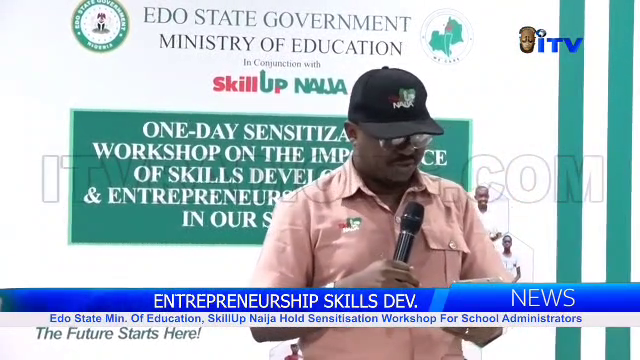
Launched sensitisation tours across states
-
Rolled out a “Train the Trainers” programme for teachers
-
Produced government-approved learning resources to standardize training
Kenneth Otidi, Director of SkillUp Naija, explained:
“At SkillUp Naija, we are more concerned with the practical execution of the new skills-based curriculum in Nigeria. Our mission is to turn policy ink into real skills that empower young Nigerians.”
Case Study: Edo State Leads the Way
Edo State has emerged as a model for implementation. Already, over 6,000 teachers have been trained in digital technologies including coding, AI, web development, video editing, social media management, vlogging, and blogging.
The Edo State Commissioner for Education, Dr. Paddy Iyamu, emphasized the importance of this teacher-first approach:
“Teachers cannot give what they do not have. Training educators is the first step in successfully teaching the new skills-based curriculum.”
Beyond Digital: Expanding Trade Skills Training
A second phase is in motion, targeting artisan and agricultural trade subjects. SkillUp Naija’s resource series includes:
-
Skills to Wealth: 21 Practical Skills for Teenagers
-
Entrepreneurship Skills for Beginners (Books 1–3)
-
Agro-Tech to Wealth (Books 1–3)
-
Introduction to New Media Marketing (Books 1–3)
-
A to Z of Student Workplace Internship Training
-
Student Workplace Internship Training (WIT) Log Book
These resources have already been reviewed and approved by various State Ministries of Education, giving them official status for classroom use.
Expanding Across States
Following Edo State’s example, Rivers and Bayelsa States have also partnered with SkillUp Naija to adopt the new curriculum. More states are in talks to replicate the model, ensuring that the federal skills-based curriculum mandate is not just a policy but a reality nationwide.
What’s Next for Nigeria’s Education System?
The Federal Government has called on Commissioners of Education to take ownership of the reforms, stressing that state-level participation will determine success.
With SkillUp Naija providing teacher training, sensitization, and approved materials, a roadmap for successful implementation is already in place.
The message is clear: trade skills are no longer optional—they are the foundation of Nigeria’s new education system.
Conclusion
The launch of the Nigeria new skills-based education curriculum 2025 is a watershed moment for the country’s learning ecosystem. By combining compulsory trade subjects with digital literacy, Nigeria is aligning its education system with global best practices.
With organizations like SkillUp Naija leading the charge, this reform could finally bridge the gap between classroom learning and workplace readiness — ensuring Nigerian students graduate not just with certificates, but with market-ready skills.