
2
The House of Representatives has raised strong objections to a motion introduced in the United States Senate seeking to classify Nigeria as a “Country of Particular Concern” (CPC) for alleged religious freedom violations, warning that such a move could distort the country’s security realities, strain diplomatic relations, and undermine its sovereignty.
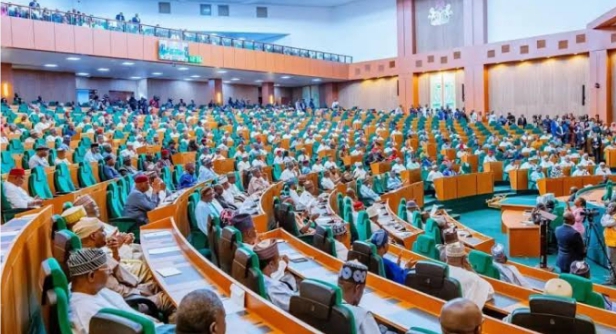
The House’s position followed the unanimous adoption of a motion titled “Urgent Need for a Coordinated Diplomatic and Domestic Response to the Proposed Nigeria Religious Freedom Accountability Act of 2025 (U.S. Senate Motion S.2747) and to Mischaracterisations of Nigeria’s Security and Religious Freedom Landscape” sponsored by Deputy Speaker Hon. Benjamin Kalu and other lawmakers during Tuesday’s plenary.
The controversial motion, introduced on September 9, 2025, seeks to compel the U.S. Secretary of State to designate Nigeria as a CPC and impose targeted sanctions on certain Nigerian officials under Executive Order 13818 (Global Magnitsky) and other U.S. laws. It follows repeated recommendations by the U.S. Commission on International Religious Freedom (USCIRF), which has accused Nigeria of systemic abuses and failure to curb violence by non-state actors.
However, Kalu, backed by a majority of lawmakers, dismissed the claims as misleading and grossly misrepresenting Nigeria’s complex realities.
“Our challenges are multifaceted and cannot be reduced to religious intolerance,” the motion stated. “They include terrorism, insurgency, organised criminality, farmer-herder clashes, separatist movements, and communal violence — all of which cut across religious and ethnic lines.”
Kalu further emphasised that Nigeria’s 1999 Constitution guarantees freedom of thought, conscience, and religion, prohibits any state religion, and protects every citizen’s right to worship and evangelise freely. He noted that successive governments, security agencies, religious leaders, and civil society groups have made sustained efforts to promote religious tolerance and prosecute offenders, efforts acknowledged even in the U.S. State Department’s 2023 human rights report on Nigeria.
Lawmakers cautioned that foreign legislative actions based on incomplete or distorted information could embolden extremist actors, destabilise the nation’s security architecture, and jeopardise diplomatic partnerships. They reaffirmed Nigeria’s long-standing cooperation with the U.S. in counterterrorism, democracy promotion, interfaith dialogue, and peacebuilding, while urging Washington to pursue evidence-based and respectful engagement.
Following intense debate, the House passed several resolutions aimed at countering the U.S. motion. It condemned all forms of religious persecution, rejected attempts to portray Nigeria’s security challenges as state-sponsored religious conflict, and directed relevant committees to coordinate diplomatic and legislative responses within 21 days.
The Ministry of Foreign Affairs and Nigeria’s Embassy in Washington were also instructed to deliver a formal diplomatic demarche to the sponsors of the motion and relevant congressional committees. Additionally, the House proposed establishing a Nigeria-U.S. Joint Fact-Finding and Dialogue Mechanism on Freedom of Religion or Belief and invited USCIRF officials to appear before lawmakers to explain their sources, methodology, and findings.
The Committee on Legislative Compliance was tasked with monitoring implementation and reporting back within 28 days. Copies of the House’s position will be transmitted to the Presidency, security agencies, U.S. authorities, and regional bodies such as the African Union and ECOWAS.
In concluding the debate, Kalu reaffirmed Nigeria’s commitment to religious liberty, peaceful coexistence, and mutual respect in its global engagements.
“The House calls on our international partners to adopt balanced, nuanced, and evidence-based approaches to issues affecting Nigeria’s national interest,” he stated. “We remain committed to protecting the fundamental rights of all Nigerians and promoting interfaith harmony while safeguarding our sovereignty.”
Supporting the motion, House Majority Leader Hon. Julius Ihonvbere warned that failure to respond promptly could have serious consequences.
“Some of us underestimate the gravity of this development in the U.S. Senate,” he cautioned. “If we don’t act swiftly and the motion gains traction, reversing it will require enormous time and resources.”
He attributed the push behind the motion to misinformation spread by certain individuals, including Nigerians in the diaspora, and outdated perceptions of Nigeria in American political and academic circles. “Many Americans — students, parents, even lawmakers — still view Nigeria through the lens of the 1950s and 60s, as a nation mired in ethnic and religious divisions,” he added.
Hon. Oluwole One, contributing to the debate, revealed that the U.S. House Foreign Affairs Subcommittee had already held a public hearing on the motion without inviting Nigeria’s mission to participate. “Our President is a Muslim married to a Christian. An Islamic scholar was recently honoured in Katsina and tragically killed by bandits. These examples show that our conflicts are not religious,” he argued, describing the U.S. move as a “deliberate attempt to tarnish Nigeria’s image.”
Also contributing, Hon. Saddam Sodi, a former diplomat, called for a complete overhaul of Nigeria’s approach to legislative diplomacy.
“This is the time for our parliament to reinvent its international engagement strategy,” he said. “Nigeria is a strategic player for the U.S., not just in Africa but globally, due to our energy potential and geopolitical relevance. Our actions can reshape global political and energy dynamics.”
Sodi recalled how Nigeria successfully countered a 2015 U.S. National Security Council report predicting its disintegration, stressing the need for similar proactive diplomacy. “This motion is not yet U.S. government policy, but if we stay silent, it could become one. Parliament must lead a robust diplomatic response to stop that,” he concluded.
The House thereafter resolved to intensify engagement with the U.S. Congress, diplomatic channels, and Nigerian diaspora groups to correct misconceptions and prevent the motion from progressing further.